The secret to effective programming rests in a “Yes…and” approach. Recital performance can and should check the boxes of our standard repertoire from well-respected composers across time. Our audition traditions demand that we know this repertoire, and someone who has not performed it may find themselves at a disadvantage at a future audition or competition. The standard repertoire has much to teach us, but it is not enough on its own.
Why “Yes…and”?
The “Yes…and” approach keeps quality works which have stood the test of time, while combining them with compositions which make our performances unique to us. Don’t toss out Felix and Wolfgang in favor of Fanny and Maria, or slight the Chevalier de Saint-Georges in favor of Anne Hunter or Francesca Gonzaga.
Yes, there is time.
We can perform a combination of classics and newer, unique works which will shine on your recital program and inspire your listeners to find out more. How do we fit it all in? Add a shared chamber music recital to the calendar, program a Junior collegiate recital even if not required, bring everyone to a park and perform there. Not every performance needs to have the same parameters.
So how do we find them?
- Follow players you admire, and track performances and videos to see what they are programming, supporting, and commissioning.
- Look to recordings to find existing repertoire you love, which might even be for another instrument. I started playing the delightful trumpet and piano solo Framed, by Cecelia McDowell, after hearing it on Raquel Samayoa’s album Trumpet Songs. It’s fantastic on tuba.
- Explore chamber music. Inez McComas’ The Middle Pigeons for trombone (works great on euph too), tuba, and electronic track can be heard on URSA by Steph Frye Clark and Sarah Paradis, one of a whole album of works for low brass, percussion, and piano by women. The Backburner Ensemble has recorded a terrific album of music for tuba euphonium ensemble which brings new and classic works into the spotlight.
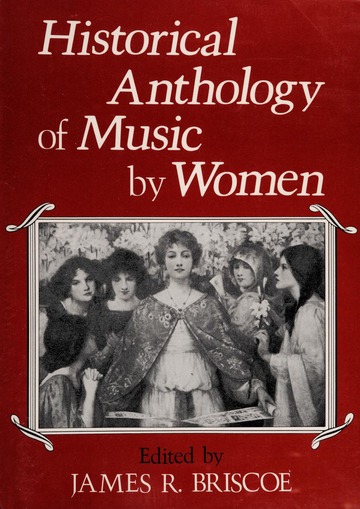
- Grab a collection volume or anthology. These are great shortcuts to find a curated collection all in one place, which could be centered on an instrument, such as cello or low voice, or a historical grouping which could be translated to any instrument. I got my start with the old classic Briscoe Historical Anthology of Music by Women (1987 and 2004), and these are still available (the 2004 volume includes 55 compositions by 46 women composers, from ancient Greece to the present).
- Research competition solo repertoire from the International Women’s Brass Conference and other events which value exploratory programming. The IWBC has long set an example by commissioning chamber music as well.
- There are robust repertoire sources in the form of online databases, including those found at the end of this post, which have resulted from dissertations and projects. Not seeing exactly what you want? Reach out and ask the curators if they have ideas.
“Yes…and”? is a call to action.
Combine familiar, standard repertoire with works of similar era and geographic location to showcase contrast and connection. A recital of music by both Felix and Fanny Mendelssohn, or Wolfgang and Anna Mozart, would be unique and quite enjoyable for both the players and the audience.
How to “Yes…and” TubaChristmas?
Many of you know I love TubaChristmas and have been performing and conducting these special holiday performances for decades. These special concerts allow tuba and euphonium players a chance at the melody, as we gather joyfully to perform common carols of the season. The traditional approach uses pre-determined repertoire which makes it easy to show up anywhere and join in. “Yes…and….”
- Make your own arrangements of your favorite hymns, global song repertoire, and really anything that could have a sleigh bell accompaniment.
- Seek out arrangements like my Tuba and Euphonium Christmas Companion, a set of songs designed to be interwoven with the well-loved original book.
- Commission new works to add to the experience, which will then become part of the canon for future celebrations. As most of these songs are under three minutes, composing holiday carols is an approachable project for anyone.
The path to stronger recital repertoire is ours to walk in our own unique way. As artists, our creative process keeps us learning and improving, and we owe it to ourselves to include repertoire in that creativity. It is our own individual journey which audiences gather to experience, so find your “Yes…and….” and don’t forget to invite me to the show!
Helpful Resources:
What have I missed? Send me additional links and we will add them to our list below…
Women Composers, Vol. 1: A Graded Anthology for Cello and Piano Score and Part Piano Accompaniment
24 Italian Songs & Arias by Women Composers ed. Randi Marrazzo & Nicole Leone
Historical Anthology of Music by Women (55 compositions by 46 women composers from the ancient Greeks to the present) by James R. Briscoe
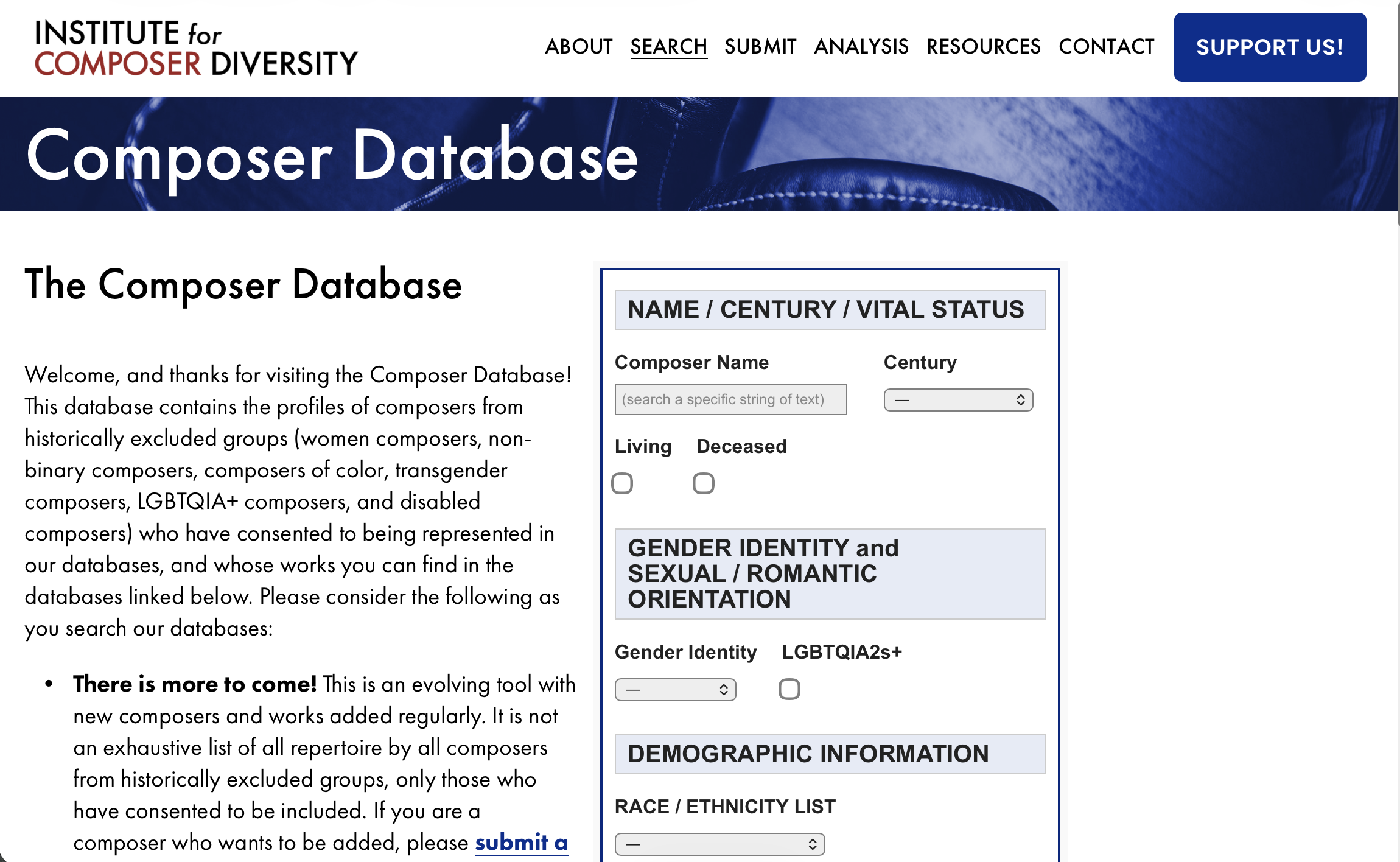
The Institute for Composer Diversity’s Composer Database
Natalie Mannix: Trombone Compositions by Women Composers Database
Lin Foulk: Works with Horn by Female Composers Database
Caiti McKinney: Represent: Repertoire for Horn by Underrepresented Composers Database
Amy Dunker: Trumpet Music by Women Composers Handout
Diana Ambache’s Women of Note (information site for performers, programme planners and researchers) and Handout